
FineTest
SKU(재고 관리 코드):FNab03235
anti- FUBP1 antibody
anti- FUBP1 antibody
Dive into the realm of gene regulation and transcription research with our Anti-FUBP1 Antibody, available in a 100µg vial. Far Upstream Element (FUSE)-Binding Protein 1 (FUBP1) is a critical player in the control of gene expression, impacting various cellular processes and molecular pathways. This highly specific antibody empowers researchers to investigate FUBP1's functions, contributing to a deeper understanding of transcriptional regulation and its role in health and disease.
Key Features:
- Exceptional Specificity: Our Anti-FUBP1 Antibody is meticulously tested to specifically target FUBP1, minimizing the risk of cross-reactivity.
- Versatile Applications: Well-suited for various experimental techniques, including chromatin immunoprecipitation, Western blotting, and transcriptional studies.
- Ample Quantity: With 100µg, you have a generous supply for multiple experiments.
- High-Quality Standards: Manufactured to meet stringent industry standards, assuring consistent and reproducible results.
- Elevate Your Research: Whether you're exploring gene regulation, transcriptional control, or FUBP1's functions, our Anti-FUBP1 Antibody offers precision and versatility.
Product Name
FUBP1 antibody
Size
100µg
Form
liquid
Purification
Immunogen affinity purified
Purity
≥95% as determined by SDS-PAGE
Host
Rabbit
Clonality
polyclonal
Isotype
IgG
Storage
PBS with 0.02% sodium azide and 50% glycerol pH 7.3, -20℃ for 12 months (Avoid repeated freeze / thaw cycles.)
BACKGROUND
The protein encoded by this gene is a single stranded DNA-binding protein that binds to multiple DNA elements, including the far upstream element (FUSE) located upstream of c-myc. Binding to FUSE occurs on the non-coding strand, and is important to the regulation of c-myc in undifferentiated cells. This protein contains three domains, an amphipathic helix N-terminal domain, a DNA-binding central domain, and a C-terminal transactivation domain that contains three tyrosine-rich motifs. The N-terminal domain is thought to repress the activity of the C-terminal domain. This protein is also thought to bind RNA, and contains 3'-5' helicase activity with in vitro activity on both DNA-DNA and RNA-RNA duplexes. Aberrant expression of this gene has been found in malignant tissues, and this gene is important to neural system and lung development. Binding of this protein to viral RNA is thought to play a role in several viral diseases, including hepatitis C and hand, foot and mouth disease. Alternative splicing results in multiple transcript variants.
IMMUNOGEN INFORMATION
Immunogen
far upstream element (FUSE) binding protein 1
Observed MW
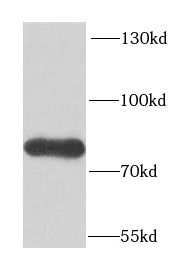
79 kDa
APPLICATION
Tested Application
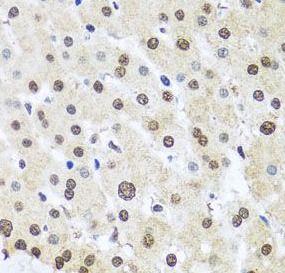
ELISA, WB, IHC
Recommended Dilution
WB: 1:500 - 1:2000; IHC: 1:50 - 1:200
UNIPROT INFORMATION
UniProt ID
IMAGES