
Elabscience
SKU(재고 관리 코드):E-AB-68129
Phospho-BRCA1(S988) Polyclonal Antibody
Phospho-BRCA1(S988) Polyclonal Antibody
Phospho-BRCA1(S988) Polyclonal Antibody
Introducing the PHOSPHO-BRCA1(S988) Polyclonal Antibody, a cutting-edge scientific tool designed to facilitate advanced research in the field of molecular biology. This meticulously crafted antibody is specifically engineered to target and detect the phosphorylated form of BRCA1 at serine 988, enabling researchers to delve deeper into the intricate mechanisms underlying cellular processes.
With its exceptional specificity and sensitivity, the PHOSPHO-BRCA1(S988) Polyclonal Antibody offers unparalleled accuracy in identifying and quantifying the phosphorylated state of BRCA1. This antibody has been rigorously validated through extensive testing, ensuring reliable and reproducible results in a wide range of experimental conditions.
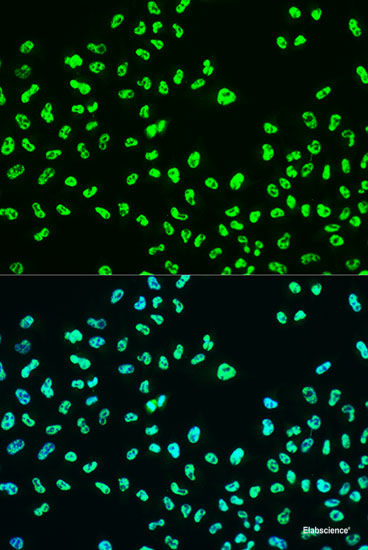
The PHOSPHO-BRCA1(S988) Polyclonal Antibody boasts an impressive affinity for its target, guaranteeing optimal performance in various applications such as immunohistochemistry, western blotting, and immunofluorescence. Its versatility allows for seamless integration into diverse research projects, empowering scientists to explore the intricate signaling pathways associated with BRCA1 phosphorylation.
Crafted with utmost precision and utilizing state-of-the-art technology, this polyclonal antibody exhibits exceptional stability and longevity, ensuring consistent performance over an extended period. Its robust formulation guarantees minimal background noise, enabling researchers to obtain clear and reliable data, even in the most challenging experimental settings.
The PHOSPHO-BRCA1(S988) Polyclonal Antibody represents a breakthrough in molecular biology research, providing an invaluable tool for scientists striving to unravel the complexities of BRCA1 phosphorylation. With its unrivaled specificity, sensitivity, and versatility, this antibody is poised to revolutionize the field, paving the way for groundbreaking discoveries and advancements in our understanding of cellular processes.
Share