RGS1; 1R20; BL34; IER1; Regulator of G-protein signaling 1; RGS1; B-cell activation protein BL34; Early response protein 1R20
Applications:
WB;IHC;IF;ELISA
Recommended Dilutions:
Western Blot: 1/500 - 1/2000. Immunohistochemistry: 1/100 - 1/300. ELISA: 1/20000. Not yet tested in other applications.
Immunogen:
The antiserum was produced against synthesized peptide derived from human RGS1. AA range:118-167
Storage:
Rabbit
Storage:
-20°C/1 year
Clonality:
Polyclonal
Isotype:
IgG
Concentration:
1 mg/ml
Observed Band:
22kD
GeneID(Human):
5996
Human Swiss-Prot No:
Q08116
Cellular localization:
Cell membrane ; Peripheral membrane protein ; Cytoplasmic side . Cytoplasm, cytosol .
Background:
This gene encodes a member of the regulator of G-protein signalling family. This protein is located on the cytosolic side of the plasma membrane and contains a conserved, 120 amino acid motif called the RGS domain. The protein attenuates the signalling activity of G-proteins by binding to activated, GTP-bound G alpha subunits and acting as a GTPase activating protein (GAP), increasing the rate of conversion of the GTP to GDP. This hydrolysis allows the G alpha subunits to bind G beta/gamma subunit heterodimers, forming inactive G-protein heterotrimers, thereby terminating the signal. [provided by RefSeq, Jul 2008],


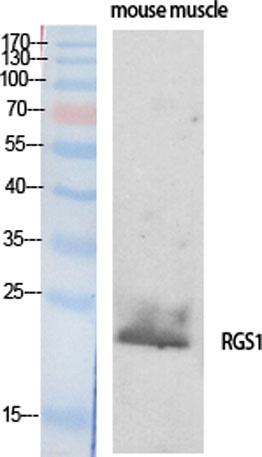 Western Blot analysis of various cells using RGS1 Polyclonal Antibody
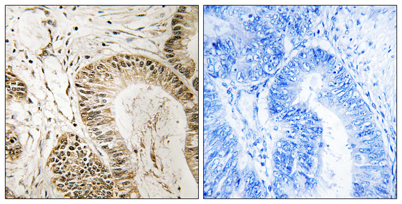 Immunohistochemistry analysis of paraffin-embedded human colon carcinoma tissue, using RGS1 Antibody. The picture on the right is blocked with the synthesized peptide.
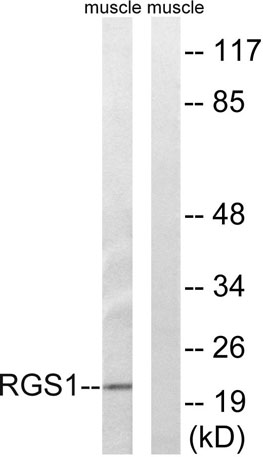 Western blot analysis of lysates from mouse muscle cells, using RGS1 Antibody. The lane on the right is blocked with the synthesized peptide.
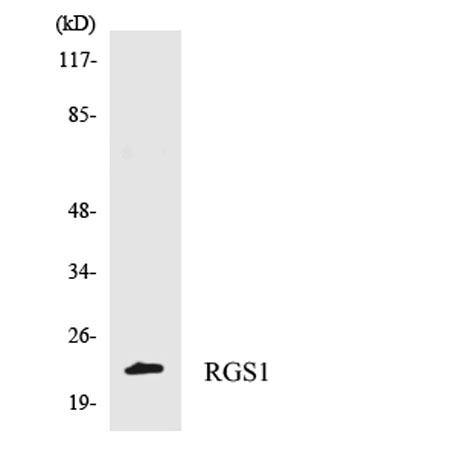 Western blot analysis of the lysates from 293 cells using RGS1 antibody.