Western Blot: 1/500 - 1/2000. Immunohistochemistry: 1/100 - 1/300. ELISA: 1/5000. Not yet tested in other applications.
Immunogen:
The antiserum was produced against synthesized peptide derived from human STK36. AA range:387-436
Storage:
-20°C/1 year
Storage:
Rabbit
Clonality:
Polyclonal
Isotype:
IgG
Concentration:
1 mg/ml
Observed Band:
170kD
GeneID(Human):
27148
Human Swiss-Prot No:
Q9NRP7
Cellular localization:
Cytoplasm . Nucleus . Cytoplasm, cytoskeleton, cilium axoneme . Low levels also present in the nucleus. .
Background:
This gene encodes a member of the serine/threonine kinase family of enzymes. This family member is similar to a Drosophila protein that plays a key role in the Hedgehog signaling pathway. This human protein is a positive regulator of the GLI zinc-finger transcription factors. Knockout studies of the homologous mouse gene suggest that defects in this human gene may lead to congenital hydrocephalus, possibly due to a functional defect in motile cilia. Because Hedgehog signaling is frequently activated in certain kinds of gastrointestinal cancers, it has been suggested that this gene is a target for the treatment of these cancers. Alternative splicing of this gene results in multiple transcript variants. [provided by RefSeq, Aug 2011],


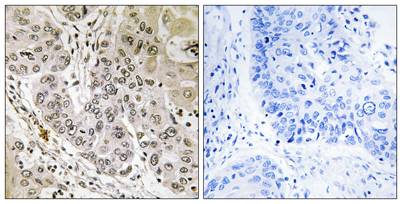 Immunohistochemistry analysis of paraffin-embedded human lung carcinoma tissue, using STK36 Antibody. The picture on the right is blocked with the synthesized peptide.
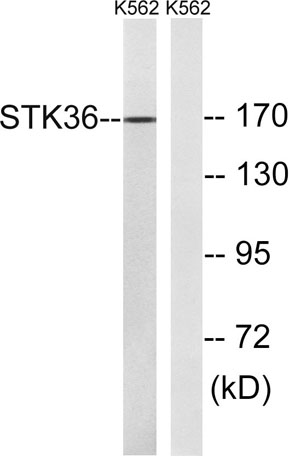 Western blot analysis of lysates from K562 cells, using STK36 Antibody. The lane on the right is blocked with the synthesized peptide.
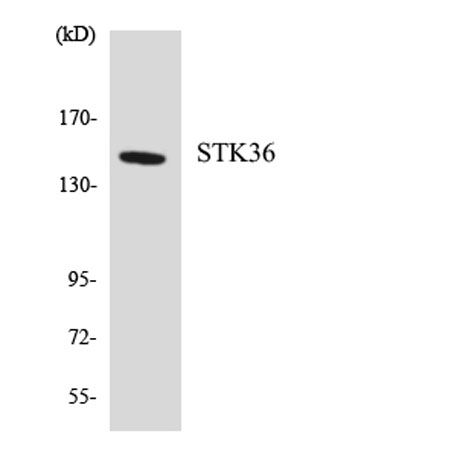 Western blot analysis of the lysates from HepG2 cells using STK36 antibody.